
 English
 Arabic
CARDIAC CATHETERIZATION
Advanced Expertise in Cardiac Catheterization & Complex Coronary Intervention
Dr. Amir Anwar has extensive experience in cardiac catheterization and interventional cardiology, with a particular interest in complex coronary artery disease and challenging coronary interventions.
His clinical expertise includes the assessment and catheter-based treatment of coronary artery disease, including Chronic Total Occlusions (CTO) and other complex coronary lesions.
If you have been advised to undergo coronary angiography or are seeking specialist assessment for a complex coronary condition, Dr. Amir Anwar can evaluate your case and discuss the most appropriate treatment options.
SPECIALIST EXPERTISE
Experience in Complex Coronary Care
Cardiac catheterization plays an important role in the diagnosis and treatment of many cardiovascular conditions. It allows specialists to examine the coronary arteries and, when appropriate, perform minimally invasive procedures to improve blood flow to the heart.
Dr. Amir Anwar has developed extensive experience in interventional cardiology, including the management of complex coronary artery disease.
His areas of interest include complex coronary interventions and Chronic Total Occlusions (CTO), as well as challenging coronary lesions that may require specialized interventional techniques.
Each patient is assessed individually. Treatment decisions depend on symptoms, clinical findings, previous investigations, coronary anatomy, and overall cardiovascular health.
UNDERSTANDING THE PROCEDURE
What Is Cardiac Catheterization?
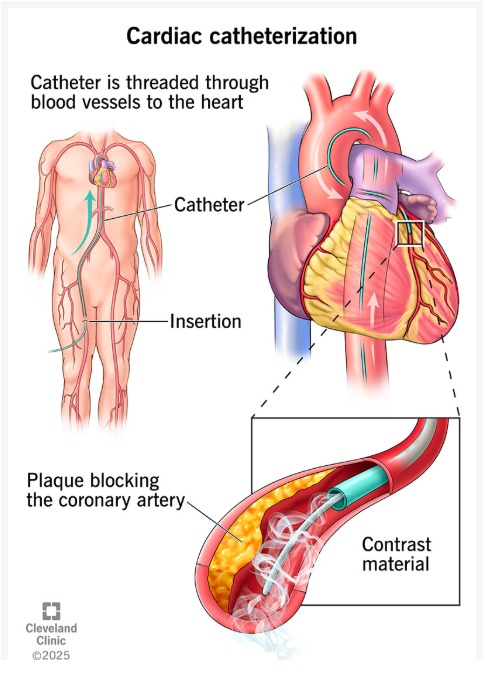
Cardiac catheterization is a minimally invasive procedure used to examine the heart and blood vessels. A thin, flexible tube called a catheter is introduced through a blood vessel and guided toward the heart.
Cardiac catheterization can provide detailed information about the coronary arteries and help doctors identify areas of narrowing or blockage.
One of the most common catheter-based investigations is coronary angiography, in which contrast material and X-ray imaging are used to visualize the coronary arteries.
When appropriate, diagnostic assessment and treatment may be performed during the same catheter-based procedure. Depending on the patient’s condition, this may include balloon angioplasty and coronary stent placement.
The decision to perform cardiac catheterization depends on the patient’s symptoms, medical history, investigations, and clinical assessment.
WHEN INTERVENTION MAY BE CONSIDERED
When Is Coronary Intervention Needed?
Coronary intervention may be considered when a coronary artery becomes significantly narrowed or blocked and medical treatment alone may not adequately control symptoms or address the patient’s cardiovascular condition.
The appropriate treatment varies from patient to patient. A specialist assessment is important to determine whether medication, further investigation, an interventional procedure, or another treatment approach is appropriate.
Recent Myocardial Infarction
A recent heart attack occurs when blood flow to part of the heart is suddenly reduced or blocked, causing damage to the heart muscle. Depending on the situation, urgent coronary angiography and catheter-based treatment may be required.
Unstable Angina
Unstable angina causes new, worsening, or unexpected chest pain, sometimes even at rest. It requires prompt medical assessment to determine the cause and reduce the risk of a heart attack.
Stable Coronary Artery Disease
Stable coronary artery disease occurs when plaque buildup narrows the coronary arteries, often causing chest discomfort or shortness of breath during activity. When symptoms persist despite medical treatment, further assessment may help determine whether coronary intervention is appropriate.
Complex Coronary Interventions
Heavily calcified coronary arteries
Heavily calcified coronary arteries occur when hard calcium deposits build up inside your heart's arteries, making them rigid and narrow like concrete pipes.While traditional stenting works well for softer blockages, these rock-hard barriers require specialized, advanced techniques to safely clear the path and restore healthy blood flow.
Rotablation
When heart blockages become hardened by calcium, traditional stenting isn’t enough. Rotablation solves this by utilizing a tiny, diamond-coated device to gently shave away the rock-hard plaque. This advanced technique softens the rigid artery from the inside out.
Chronic Total Occlusion (CTO)
A dedicated CTO procedure may be used to treat these complex blockages using specialized catheter-based techniques. When successful, the artery has been treated after a dedicated CTO procedure, with the aim of restoring blood flow and improving the management of complex coronary artery disease.
Shockwave Intravascular Lithotripsy (IVL)
When heart arteries are blocked by severe calcium, traditional balloons cannot open them effectively. Shockwave IVL solves this using advanced acoustic shockwave therapy. By delivering localized sonic pulses from inside the artery, this technique safely breaks up stubborn calcium deposits.
Coronary interventions after bypass surgery
Over time, original bypass grafts can narrow or fail, requiring advanced care to restore healthy blood flow without a second open-heart surgery. Performing angioplasty and stenting after bypass surgery requires a highly specialized approach
left main interventions
The left main artery is the single most important blood vessel in your heart, supplying blood to the entire left side of the heart muscle. Because a blockage here impacts a large area, treating it requires exceptional precision. Using high-definition internal heart imaging, we can precisely map, open, and stent this critical artery, offering patients a safer, highly effective option with a much faster recovery time.
YOUR CARE JOURNEY
From Assessment to Treatment
Every patient’s cardiovascular condition is different. Our approach begins with understanding your medical history and continues with careful assessment and individualized treatment planning.

Consultation
Your symptoms, medical history, previous cardiac procedures, medications, and cardiovascular risk factors are reviewed.
Detailed Assessment
Available investigations and cardiac imaging are evaluated to understand the condition of the heart and coronary arteries.
Treatment Planning
If an interventional procedure is appropriate, the available options, potential benefits, risks, and proposed treatment approach are discussed with you.
Procedure & Follow-up
When catheter-based treatment is indicated, the appropriate interventional approach is performed, followed by medical care and follow-up according to your individual needs.
FREQUENTLY ASKED QUESTIONS
Cardiac Catheterization — FAQs
Cardiac catheterization is a minimally invasive procedure that allows doctors to examine the heart and coronary arteries using a thin catheter introduced through a blood vessel.
Coronary angiography is an imaging procedure performed during cardiac catheterization. Contrast material is introduced through a catheter, allowing the coronary arteries to be visualized and areas of narrowing or blockage to be identified.
CTO stands for Chronic Total Occlusion. It describes a coronary artery that has been completely blocked for an extended period of time.
CTO interventions can be technically more challenging than procedures for less complex coronary blockages. They may require specialized techniques and detailed procedural planning based on the patient's coronary anatomy.
No. The most appropriate treatment depends on the location and characteristics of the blockage, symptoms, heart function, other medical conditions, and overall clinical assessment. Treatment may include medication, catheter-based intervention, bypass surgery, or other approaches.
The decision is made after reviewing your symptoms, medical history, examination findings, previous investigations, and cardiovascular risk factors. A cardiology consultation can help determine whether further testing or cardiac catheterization is appropriate.
Have Questions About Your Heart or Coronary Arteries?
If you have been diagnosed with coronary artery disease, are experiencing ongoing cardiac symptoms, or have been advised to consider coronary angiography or cardiac catheterization, a specialist assessment can help you understand your condition and available treatment options.